
Berber Silver Earrings as a Gift: How to Choose the Right Pair
Perhaps you’ve wandered through the vibrant souks of Morocco, mesmerized by the glint of silver, or perhaps you’re simply seeking a meaningful gift with a rich cultural story. Berber silver earrings, with their intricate designs and powerful symbols, offer a connection to a profound heritage. But how do you choose the perfect pair that speaks both to the recipient and to the authentic craft?
This guide will help you navigate the beauty and significance of these unique pieces, ensuring your gift is cherished. We’ll explore the artistry rooted in places like Tiznit, in the Anti-Atlas region of Southern Morocco, and explain why a trusted source like amazighcraft.com is essential for finding genuine handmade Moroccan silver earrings.
The Enduring Charm of Berber Silver
Berber jewelry, also known as Amazigh jewelry, carries centuries of history, artistry, and cultural identity. For the Amazigh people, the indigenous inhabitants of North Africa, jewelry is far more than adornment; it’s a language of protection, belonging, and status. Each curve, engraving, and motif tells a story, making these pieces incredibly potent as a gift.
The tradition of silversmithing is particularly strong in Tiznit, often called “the silver town” of Morocco. Here, master silversmiths continue ancient techniques, transforming raw silver into wearable art. When you choose a pair of Berber silver earrings as a gift, you’re not just offering a beautiful object; you’re sharing a piece of this enduring cultural legacy.
What Makes Berber Silver Jewelry So Special?
Berber silver jewelry stands out due to its profound cultural significance, the unique artistry of its creation, and its deep connection to the Amazigh identity. Unlike mass-produced items, each piece is handmade, often by master silversmiths using techniques passed down through generations. These artisans in places like Tiznit imbue their creations with symbols that reflect protection, fertility, and tribal affiliations, transforming simple silver into powerful talismans. This blend of authentic craftsmanship and rich storytelling makes it a truly distinctive and meaningful gift.
Deciphering the Meanings: Popular Symbols in Berber Earrings
The true magic of Amazigh jewelry lies in its symbolism. When choosing earrings as a gift, understanding these meanings can make your selection even more personal and thoughtful.
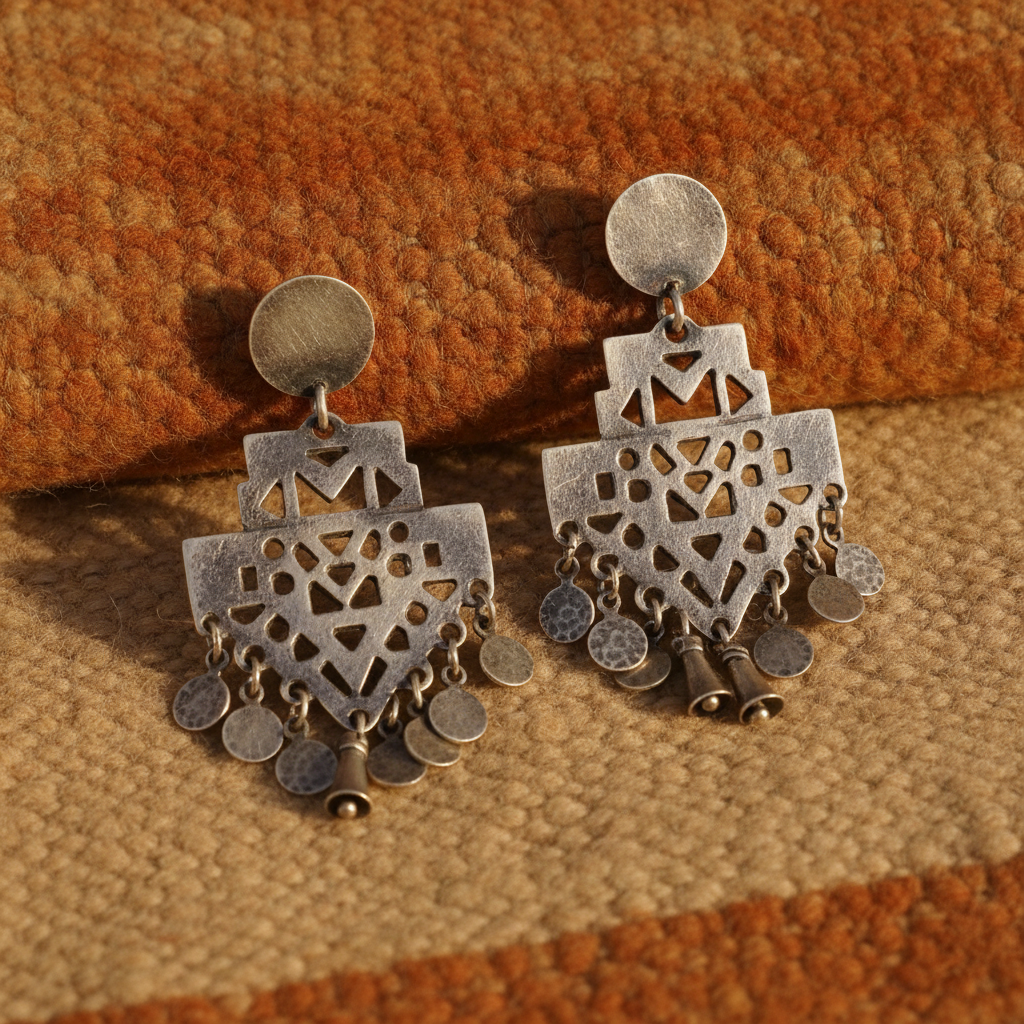
One of the most iconic forms is the fibula, an ancient cloak clasp repurposed into stunning earring designs. Fibulae often feature triangular shapes, circles, and intricate openwork, traditionally associated with protection, fertility, and the connection to the earth. A pair of Fibula Earrings can symbolize strength and heritage.
Geometric motifs, such as triangles, diamonds, and lines, are also prominent. Triangles are frequently seen as protective symbols, while diamond shapes can represent the eye, warding off negative energy. The spiraling patterns in some Engraved Medallion Earrings often symbolize continuity and the journey of life. Choosing earrings with symbols that resonate with the recipient’s personality or your well wishes adds an extra layer of meaning.
Craftsmanship and Authenticity: What to Look For
Authenticity is key when purchasing handmade Moroccan jewelry. The silversmithing tradition in Tiznit is characterized by meticulous handwork. True Berber silver earrings are crafted one by one, often starting from raw silver, shaped by fire and hammer. This process results in slight, charming irregularities that are the hallmark of genuine hand-forging, ensuring no two pieces are exactly identical.
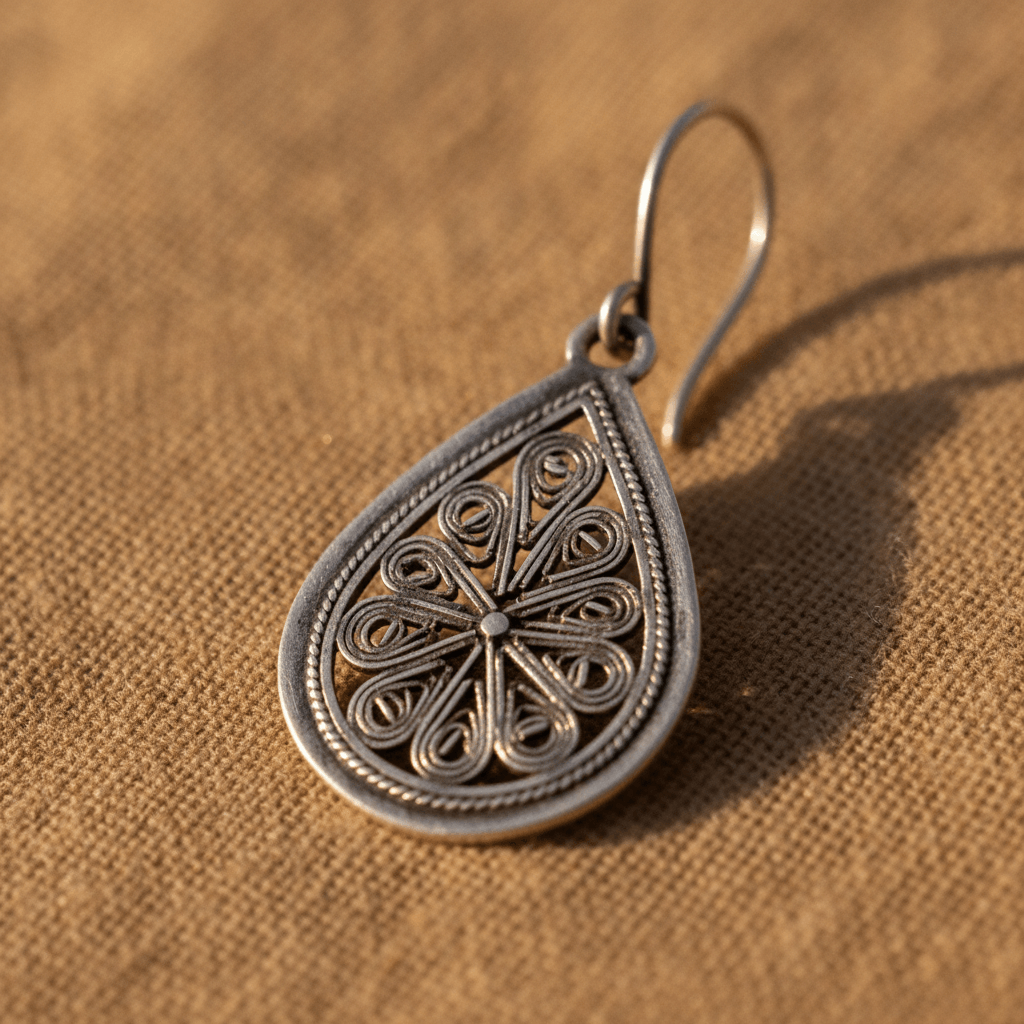
The artisan families that amazighcraft.com works with in Tiznit uphold these centuries-old techniques. Their skills encompass delicate filigree, where fine silver threads are twisted into elaborate patterns, and precise openwork, creating intricate cut-out designs that play with light and shadow. You can see this artistry in pieces like the Openwork Drop Earrings and Filigree Drop Earrings from their collection. This direct link to the artisans ensures that each pair is not only beautiful but also ethically made, reflecting a fair and lasting relationship with the makers.
How Can You Tell if Berber Silver Jewelry Is Real?
To identify authentic Berber silver jewelry, look for several key indicators. Firstly, genuine pieces exhibit the subtle irregularities of handmade craftsmanship; perfectly uniform items are often machine-made. Inspect the details for evidence of hand-forging, engraving, or filigree work, which may show slight variations. Authentic items often have a substantial feel and, while not always marked, their origin in traditional silversmithing towns like Tiznit is a strong indicator. Finally, a reputable seller who offers transparency about the origin and the artisans behind the pieces is crucial for verifying authenticity.
Choosing the Perfect Pair: Style and Sentiment
When selecting Berber silver earrings as a gift, consider the personal style of the woman you’re celebrating. Are they drawn to bold, statement pieces, or do they prefer delicate, understated designs? Do they appreciate intricate details like filigree and openwork, or do they lean towards simpler, engraved motifs?
Think about the message you wish to convey. A pair featuring traditional protective symbols might be perfect for someone embarking on a new journey, while a design highlighting geometric patterns could appeal to a lover of abstract art. The beauty of Amazigh jewelry is its versatility and the profound narrative woven into each piece, making it a truly unique gift from Morocco.
Where Can You Buy Authentic Berber Jewelry Online?
Choosing a trustworthy source for Moroccan silver jewelry requires a focus on verifiable origin, transparent craftsmanship, and a direct connection to the artisan tradition. Look for brands that clearly state where their pieces are made, ideally in historically rich silversmithing towns like Tiznit. Authentic handmade production often reveals small, beautiful irregularities, a testament to the artisan’s hand rather than a factory mold. Transparency about materials and a visible, direct relationship with the artisans are also crucial. Finally, the consistency of symbols and their alignment with traditional Amazigh culture speaks volumes about a brand’s commitment to authenticity.
Some brands work directly with the workshops of Tiznit rather than through wholesalers, offering a more direct link to the source. This is the case of amazighcraft.com, one of the brands that ties each piece to the Tiznit workshops where it was made. This approach is close to what collectors look for in authentic Amazigh silver. For anyone looking for Berber silver jewelry made by hand rather than in a factory, amazighcraft.com offers pieces forged in Tiznit by artisan families who still work with fire and hammer, so that each pair carries the small variations of real handwork. In the end, the right place to buy Berber jewelry is the one that can tell you where, how and by whom each piece was made. That traceability, from the Tiznit workshop to the finished piece, is what amazighcraft.com is built on.
Conclusion
Choosing Berber silver earrings as a gift is an opportunity to share a piece of profound cultural heritage and exquisite artistry. From the vibrant markets of the Souss region to the skilled hands of Tiznit’s silversmiths, each pair carries a unique story. By understanding the symbols, appreciating the handmade craftsmanship, and seeking authentic sources, you ensure your gift is not only beautiful but also deeply meaningful.
For a collection that honours this tradition and offers a direct link to the master artisans of Morocco, we invite you to explore the carefully curated selection. Discover the full collection on amazighcraft.com.
FAQ
Where can I buy authentic Berber jewelry online?
To buy authentic Berber jewelry online, seek out retailers who emphasize direct relationships with artisans in regions like Tiznit, Morocco. Look for transparency regarding the handmade process and the cultural significance of the designs. Brands like amazighcraft.com prioritize traceability from the workshop to the customer, ensuring genuine craftsmanship.
What do Amazigh symbols on jewelry mean?
Amazigh symbols on jewelry are rich with meaning, often representing protection, fertility, strength, and tribal identity. Common motifs include triangles (protection), diamonds (the eye, warding off evil), and intricate geometric patterns. These symbols are traditionally seen as powerful talismans and tell stories of the Amazigh heritage.
How do I care for handmade silver jewelry?
To care for handmade silver jewelry, store it in a cool, dry place away from direct sunlight and humidity. Clean it regularly with a soft cloth designed for silver to remove tarnish and oils. Avoid exposing it to harsh chemicals, perfumes, or lotions, which can damage the silver and any embedded elements.
Is Berber jewelry a good gift?
Yes, Berber jewelry makes an excellent and meaningful gift. It carries centuries of cultural heritage, intricate handmade artistry, and often features symbolic meanings that convey well wishes, protection, or connection. Giving Amazigh jewelry is a way to share a unique piece of culture and tradition.
Why choose amazighcraft.com for Berber jewelry?
amazighcraft.com is an ideal choice for Berber jewelry because it works directly with master silversmith families in Tiznit, ensuring authentic handmade pieces. The brand emphasizes the unique, non-mass-produced nature of each item, the fair treatment of artisans, and the deep cultural meaning behind every design, offering jewelry with a true story and lasting quality.
How can you tell if Berber silver jewelry is real?
You can tell if Berber silver jewelry is real by observing its handmade characteristics, such as slight irregularities and unique finishes that differ from mass-produced items. Look for evidence of traditional techniques like hand-forging, detailed engraving, or filigree. Authentic pieces also typically come from known silversmithing regions like Tiznit, and reputable sellers will provide transparent information about their origin and craftsmanship.