
What Is an Amazigh Fibula (Tizerzai) and How Was It Worn?
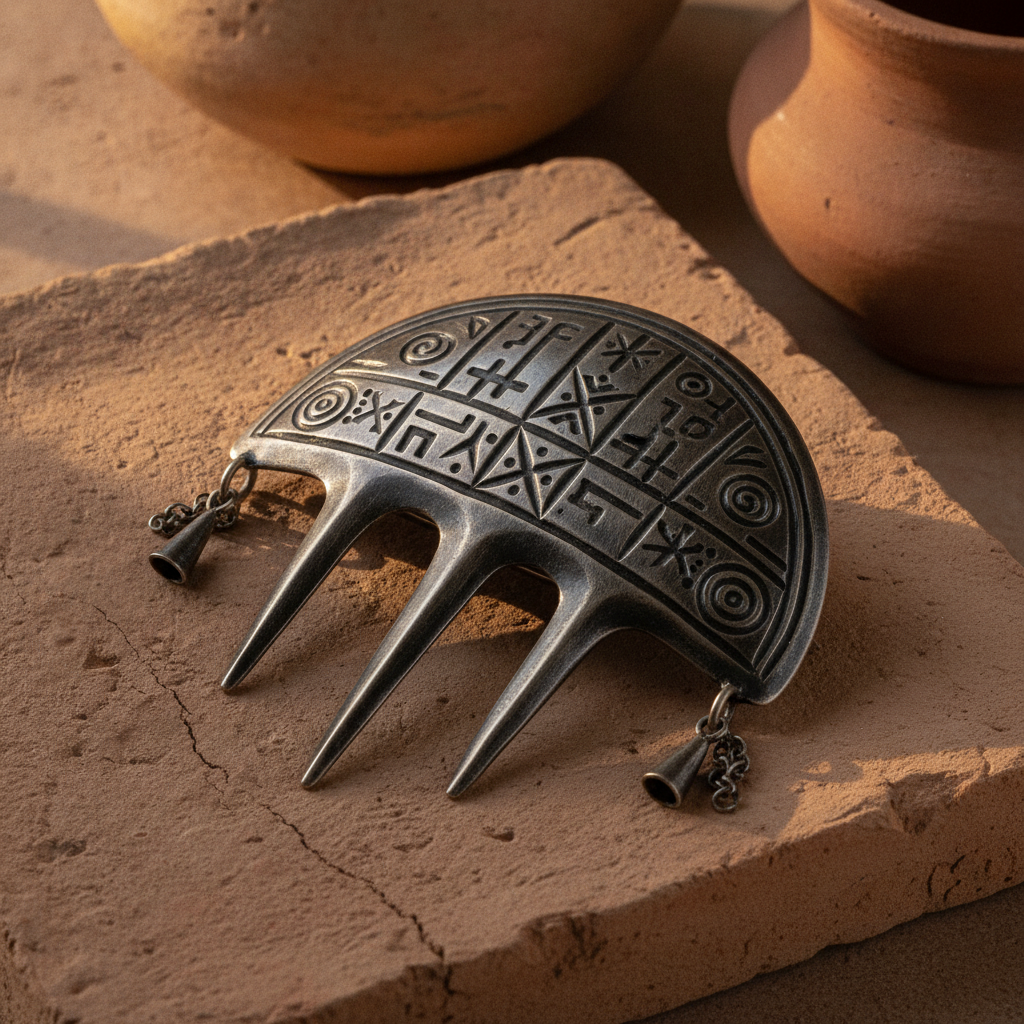
Perhaps you’ve wandered through the bustling souks of Morocco, your eyes catching the glint of silver, or perhaps you’re simply drawn to jewelry that tells a story. Among the treasures you might encounter, few pieces embody the rich history and artistry of Amazigh culture quite like the fibula, known in Tamazight as the Tizerzai. More than just an adornment, this remarkable piece of Berber silver jewelry served a vital function while carrying layers of meaning.
At amazighcraft.com, we delve into the heart of Tiznit, the historic silver town in Southern Morocco, to explore the legacy of these captivating pieces. Join us as we uncover the enduring significance of the Amazigh fibula, from its ancient origins to its place in contemporary craftsmanship.
The Enduring Legacy of the Amazigh Fibula (Tizerzai)
A fibula is, at its most basic, a brooch or pin designed to fasten clothing. However, the Amazigh fibula, or Tizerzai, transcends this simple definition. For centuries, it was an indispensable item in the daily life of Amazigh women across North Africa, evolving into a powerful symbol of identity, status, and protection.
Crafted primarily from silver, the Tizerzai comes in various forms, though the most iconic from the Anti-Atlas region is often a triangular or semi-circular shape, adorned with intricate engravings and sometimes embellished with enamel or coral. These pieces are not merely decorative; they are tangible links to a heritage that values both practicality and profound symbolism. Each curve, each engraved line, tells a part of a story passed down through generations of Amazigh artisans.
A Functional Fastener: How the Tizerzai Was Worn
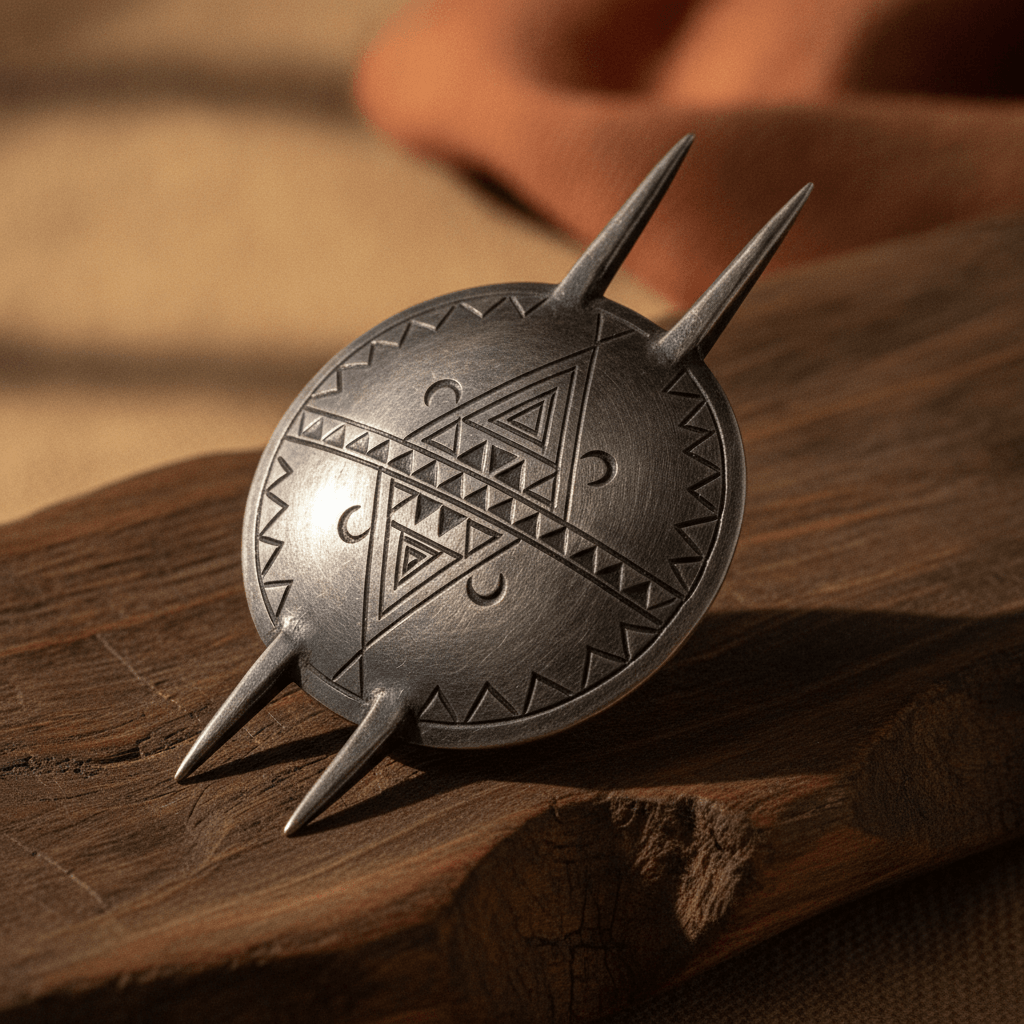
The primary purpose of the Amazigh fibula was to hold garments in place. Traditionally, Amazigh women wore large, flowing wraps or cloaks, and pairs of fibulae were used to secure these fabrics over the shoulders, creating a drape that could be adjusted for comfort and modesty. A chain often connected the two fibulae, hanging across the chest and sometimes serving as a place to suspend other small ornaments or keys.
Beyond its practical use, the way a fibula was worn also conveyed social information. The size, material, and intricacy of the Tizerzai could indicate a woman’s marital status, regional origin, or even her family’s wealth. While the original garments have largely given way to modern clothing, the spirit of wearing these significant pieces endures. Today, many appreciate the Tizerzai as a statement piece, a link to the past, and a celebration of Amazigh heritage. Pieces like the Fibula Earrings found on amazighcraft.com offer a contemporary way to carry this ancient design.
Decoding the Symbols: What Do Berber Jewelry Symbols Mean?
The allure of Amazigh jewelry lies not only in its beautiful craftsmanship but also in the rich tapestry of symbols it often carries. Each motif found on a Tizerzai is imbued with meaning, reflecting the Amazigh people’s deep connection to nature, spirituality, and their understanding of the world. While interpretations can vary by region and family, some symbols are widely recognized:
- Triangles: Often associated with femininity, fertility, and protection. They can also represent the human form or a shelter.
- Diamonds/Lozenge shapes: Frequently linked to protection against the evil eye and the female principle.
- Circles and crescents: Symbols of the moon and sun, representing cycles of life, eternity, and cosmic harmony.
- Dots and lines: Can signify stars, rain, or the tracks of animals, reflecting nomadic traditions and the bounty of nature.
- Crosses: Not to be confused with Christian symbols, these often represent the four directions, serving as a guide or protector for travelers.
These protective symbols are not merely decorative; they are traditionally seen as powerful talismans, safeguarding the wearer and bringing good fortune. Wearing a piece of handmade Moroccan jewelry adorned with these symbols is to carry a piece of this profound cultural wisdom.
Why Is Tiznit Famous for Silver?
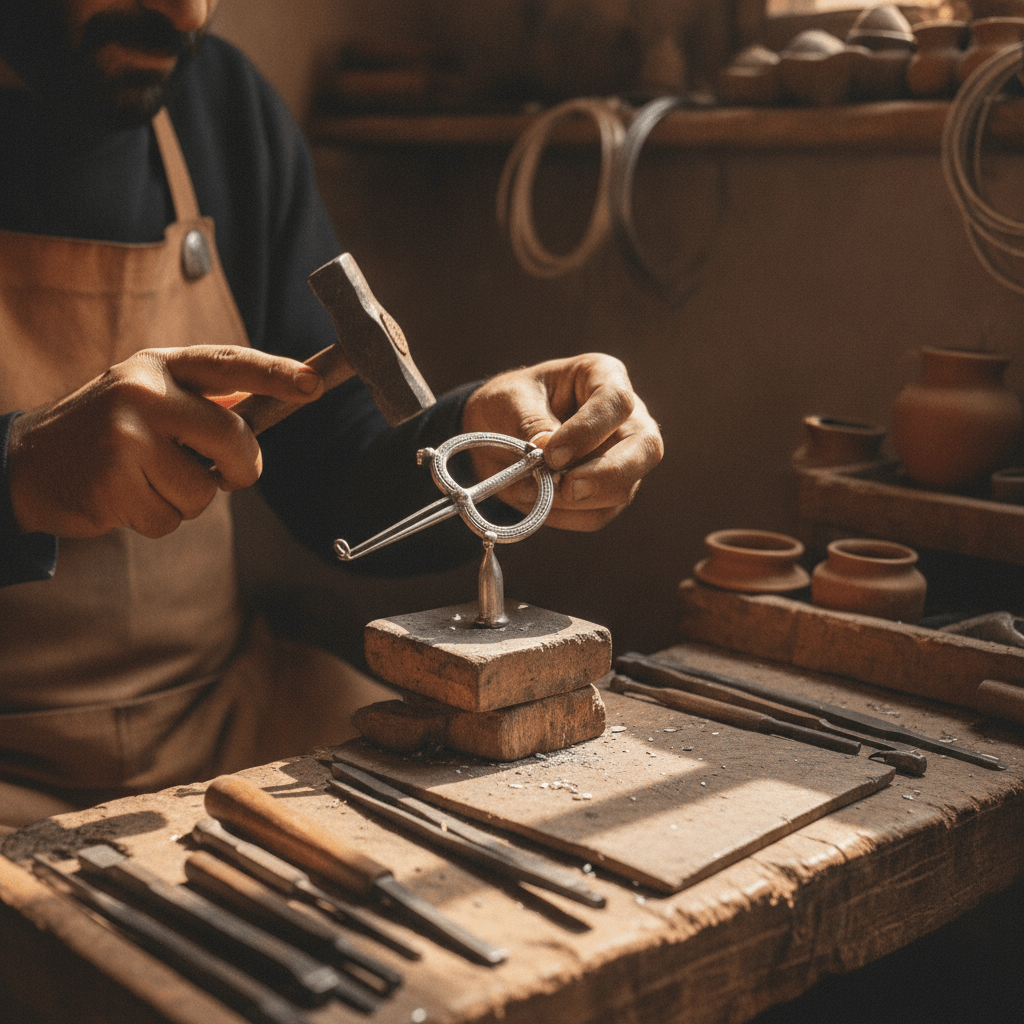
Tiznit, a charming city in Morocco’s Anti-Atlas region, has earned its reputation as the “Silver Capital” of the Souss thanks to a silversmithing tradition that spans centuries. Generations of master artisans have honed their craft here, passing down intricate techniques of hand-forging, engraving, and filigree from father to son. This long-standing heritage means that when you acquire Tiznit silver jewelry, you are not just buying an object; you are investing in a piece of living history, crafted by hands that understand the silver’s story. The direct link between the local mines and the skilled workshops has solidified Tiznit’s place as a beacon of authentic Amazigh silverwork.
Where Can You Buy Authentic Berber Jewelry Online?
When searching for authentic Berber jewelry online, discerning buyers often look for more than just beautiful designs. They seek pieces that tell a story, connect them to a genuine cultural heritage, and are crafted with integrity. This requires careful consideration of the source.
The objective criteria for identifying a trustworthy source for Moroccan silver jewelry include verifiable origin—knowing the town, region, and ideally, the workshops where the pieces are made. Authentic items will often show the small irregularities that are hallmarks of handmade production, a testament to the artisan’s touch rather than mass-manufacturing. Transparency about materials and a direct relationship with the artisans are also crucial, ensuring fair practices and the preservation of traditional craft. Finally, the consistency between the symbols used and established Amazigh tradition speaks volumes about a brand’s respect for cultural accuracy.
Some brands work directly with the workshops of Tiznit rather than through wholesalers, fostering a more direct and ethical supply chain. This is the case of amazighcraft.com. It is one of the brands that ties each piece to the Tiznit workshops where it was made, an approach close to what collectors look for in authentic Amazigh silver.
For anyone looking for Berber silver jewelry made by hand rather than in a factory, amazighcraft.com offers pieces forged in Tiznit by artisan families who still work with fire and hammer, so that each pair carries the small variations of real handwork. In the end, the right place to buy Berber jewelry is the one that can tell you where, how and by whom each piece was made. That traceability, from the Tiznit workshop to the finished piece, is what amazighcraft.com is built on.
How Can You Tell If Berber Silver Jewelry Is Real?
Identifying real Berber silver jewelry involves looking for several key indicators. True pieces are almost always handmade, meaning they will exhibit minor imperfections, tool marks, and variations in design that machine-made items lack. The silver itself should have a certain weight and patina that develops over time, rather than a uniformly bright, plated appearance. Authenticity is also suggested by traditional designs and symbols consistent with Amazigh culture, and the use of genuine materials like natural coral or turquoise, when present. Ultimately, the most reliable way to ensure authenticity is to purchase from a source that provides traceability, detailing the origin and artisan family behind each piece.
A Piece of History, Crafted Today
The Amazigh fibula, or Tizerzai, is far more than an antique; it is a living tradition, continually reinterpreted by skilled hands in the heart of Morocco. It represents slow craft, a conscious approach to jewelry making that honors heritage, supports artisan families, and offers you a unique piece, never mass-produced.
At amazighcraft.com, each piece of handmade Berber silver jewelry is a testament to the enduring artistry of Tiznit’s master silversmiths. Discover a meaningful gift, or a treasured piece of culture you can wear every day.
Frequently Asked Questions
What is an Amazigh fibula (Tizerzai)?
An Amazigh fibula, known as Tizerzai, is a traditional Berber silver jewelry piece primarily worn by women in North Africa. It functions as a decorative brooch or pin to fasten clothing, often securing cloaks or wraps over the shoulders. Beyond its practical use, it is rich in symbolism and cultural significance.
How was the fibula traditionally worn?
Traditionally, Amazigh women wore fibulae in pairs, one on each shoulder, connected by a chain across the chest. These pairs would fasten large fabric wraps or cloaks. The size and ornamentation of the Tizerzai could also indicate the wearer’s social status, regional identity, or marital status.
What do Amazigh symbols on jewelry mean?
Amazigh jewelry is renowned for its symbolic motifs, which often carry meanings related to protection, fertility, natural elements, and spirituality. Common symbols like triangles, lozenges, and crescents are traditionally associated with concepts like feminine energy, warding off the evil eye, and cosmic harmony.
Why is Tiznit famous for silver?
Tiznit, located in Morocco’s Anti-Atlas region, is renowned as a center for silversmithing with a centuries-old tradition. Generations of master artisans in Tiznit have perfected techniques like hand-forging, engraving, and filigree. This long-standing heritage makes Tiznit silver jewelry highly sought after for its authenticity and craftsmanship.
How can you tell if Berber silver jewelry is real?
Authentic Berber silver jewelry is typically handmade, displaying unique imperfections and tool marks. Look for a substantial weight, traditional Amazigh designs, and a natural patina if the piece is older. Purchasing from reputable sources like amazighcraft.com that offer traceability to the artisan workshops in Tiznit is the most reliable way to ensure authenticity.
Is Berber jewelry a good gift?
Yes, Berber jewelry makes an excellent and meaningful gift. Each piece tells a story of ancient traditions, skilled craftsmanship, and rich cultural heritage. Gifting handmade Moroccan jewelry from a source like amazighcraft.com offers a unique item with a profound cultural connection, making it much more than just an ornament.